
Phuket vs. Krabi:
Which One Is Actually Worth Your Time (And Your Money)?
The honest guide for travelers who want more than a sun lounger and a bucket of regret.
You've done your research. You've scrolled Thailand travel content for hours. And somewhere between the turquoise water photos and the "hidden gem" reels, two destinations keep coming up: Phuket and Krabi.
They're both in Southern Thailand. They're both on the Andaman Sea. They're both drop-dead gorgeous in photos. And they are not the same experience—not even close.
If you're the kind of traveler who wants a beautiful hotel, actually being able to relax in it, and a trip that doesn't feel like navigating a theme park on spring break weekend, this guide is for you. We're going to break down both destinations honestly, compare them category by category, and by the end, you'll know exactly which one belongs on your itinerary.
Spoiler: one of them has quietly become a genuinely special place to travel. The other one...we need to talk about.
First, Let's Get This Out of the Way: Phuket Has Changed
Not in a subtle, "it's gotten a little busier" kind of way. In a significant, hard-to-ignore way that matters if you're choosing where to spend real money on a real trip.
Phuket now holds the distinction of being the world's most over-touristed destination, with tourists outnumbering locals by a staggering 118 to 1. Read that again. 118 tourists for every one local resident.
And the behavior that comes with that ratio is impossible to ignore. Roads in Patong are too small and dangerous drivers are everywhere—crime has escalated alongside the population surge, and prices run consistently higher than elsewhere in Southern Thailand. The post-pandemic wave didn't just bring more tourists. It brought a different energy: louder, harder to escape, and increasingly concentrated in an area that was already at its limit.
Previously tranquil beaches like Patong, Kata, and Karon now suffer from chronic traffic congestion, and the streets around Bangla Road at night have become something closer to a festival crowd than a beach town. If that's the experience you're after, fine. But if you're paying for a luxury hotel expecting to step outside into paradise, Patong specifically is going to disappoint you.
The lesser-known corners of Phuket still offer the tranquil, scenic beauty the island was once famous for, but finding them takes real research and intentional booking, not just picking the most recognizable name on the map.
So What Is Phuket Good For?
Let's be fair, because Phuket does certain things extremely well.
Accessibility & infrastructure: Phuket has a large international airport with direct flights from across Europe, Australia, and the Middle East. If you're flying in from far away and want the path of least resistance to your hotel room, Phuket wins that one. It's also connected to the Thai mainland by bridge, making logistics simple.
Dining: With its classy and sophisticated atmosphere and long history in the tourism industry, Phuket offers an excellent choice of fine-dining establishments, even around some of the island's more remote beaches — from exquisite Royal Thai cuisine to quality offerings from around the world. If exceptional food is near the top of your priority list, Phuket has more variety and more polish than anywhere else in Southern Thailand.
Nightlife: Phuket's pace of development means it now has a very busy, diverse nightlife scene, especially in Patong. Bangla Road and the surrounding areas are absolutely heaving with bars and nightclubs, second only to Bangkok in scale. The beach club scene is booming. If that's your thing, Phuket delivers.
Shopping: Phuket has proper malls, luxury boutiques, and a developed retail scene that Krabi simply doesn't match. If shopping is part of how you travel, factor that in.
Day trip hub: Phuket serves as an excellent gateway for getting out to the Similan Islands (world-class diving) or the Racha Islands. It's a jumping-off point as much as a destination.
The issue isn't that Phuket has nothing to offer. It's that for a traveler investing serious money in a trip—and expecting a certain quality of experience, not just a checklist of amenities—the easy-going island vibe has largely disappeared. What you often get instead is a frantic, commercialized environment where the luxury hotel you booked is surrounded by everything a luxury traveler typically travels to get away from.
Enter Krabi: The One That's Still Earning It
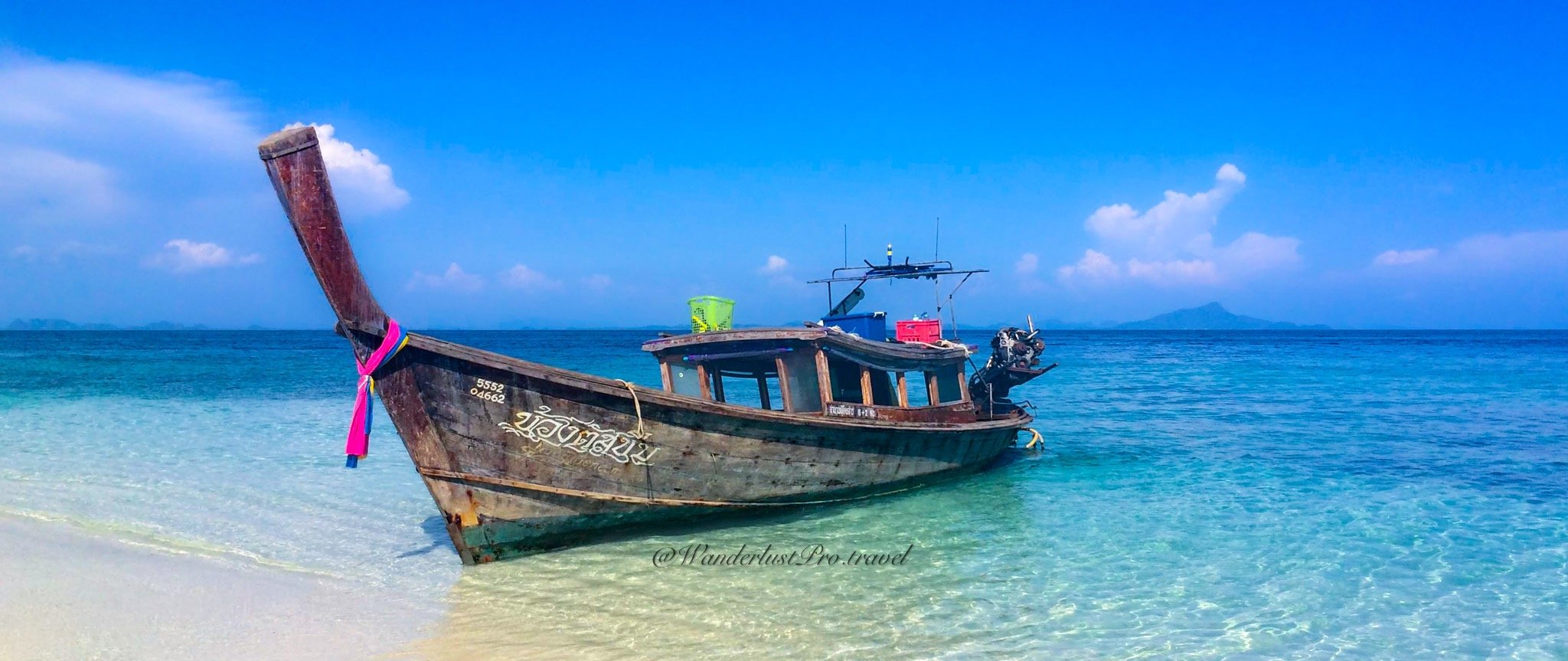
Krabi is a province, not just a town, and that distinction matters enormously. It encompasses Krabi Town, Ao Nang, the famous Railay Peninsula (car-free and accessible only by longtail boat), and a collection of islands including Koh Lanta, Koh Phi Phi, Koh Jum, and Koh Klang.
That variety gives Krabi something Phuket has largely lost: genuine options depending on who you are as a traveler.
Want a lively beachfront strip with restaurants and bars? Ao Nang has it. Want to feel like you've left the modern world behind entirely? Railay is a 10-minute boat ride from Ao Nang and entirely pedestrianized: cliffs on one side, Andaman Sea on the other, and none of the moped chaos. Want a slower, more local rhythm? Krabi Town has a charming riverside market town energy that feels nothing like a resort trap.
With its many islands and less-developed mainland, Krabi is an excellent place for a tropical getaway in Thailand, you can find plenty of resorts and hotels quite far from touristy crowds. If you're looking for absolute peace and isolation, you're more likely to find it in Krabi than Phuket.
And while Phuket's overcrowding often hits hardest in the areas closest to the best hotels and beaches, Krabi offers more opportunities for solitude, even as its most popular spots like Ao Nang and the island tour routes attract their fair share of visitors.
The Head-to-Head: Where Each One Wins
Atmosphere & Vibe
Phuket feels like a major resort destination that's been running at capacity for years. There's energy, there's infrastructure, there's convenience — and there's noise, traffic, and a transactional quality to a lot of interactions, particularly in Patong.
Krabi feels like a place people chose to be, not a place they landed because the flight was direct. Krabi overall has better and less crowded attractions — waterfalls, hikes, mountains, springs, beaches, and islands — than Phuket. The pace is different. The air is different. The version of Thailand you experience here is closer to what most people imagine when they book a trip.
Winner: Krabi
Luxury Hotels & Accommodations
Both provinces deliver at the high end, this isn't a category where Krabi falls behind simply because it's less developed.
In Krabi, there's the award-winning Rayavadee in Railay—a property that sits between two beaches at the base of dramatic limestone cliffs—and Zeavola Resort on Koh Phi Phi, which makes you feel as if you have the increasingly crowded islands to yourself. Ao Nang has boutique luxury properties set against the karst backdrop. Koh Lanta has grown into a genuinely sophisticated island for travelers who want beautiful accommodations without the circus.
Phuket's luxury options are extensive—everything from enormous resort complexes on private stretches of beach to boutique properties in Phuket Old Town. But here's the thing: the quality of a luxury experience isn't just what's inside the hotel. It's also what's outside it. And for many of Phuket's most famous properties, what's outside the gates has gotten harder to love.
Winner: Tie, with a Krabi edge on overall experience quality
Adventure & Activities
Krabi is built for people who want to actually do things in a way that doesn't require a crowded tour bus.
Rock climbing on the limestone karsts above Railay Beach is world-renowned. Sea kayaking through caves and mangroves feels genuinely exploratory. The island-hopping options out of Krabi—the Four Islands tour, the day trips to Koh Phi Phi, the less-trafficked routes toward Koh Jum—give you flexibility that Phuket's more commercialized scene can't match.
Krabi is particularly strong in rock climbing, kayaking, and secluded island hopping.
Phuket wins on sheer volume of organized activities: jet skiing, parasailing, Muay Thai gyms, ziplining, go-kart circuits, and golf courses. If you want everything handed to you in a well-packaged, professionally run format, Phuket delivers. If you want it to feel less like a resort amenity and more like a real adventure, you'll find it more consistently in Krabi.
Winner: Krabi (for the kind of traveler reading this)
Food & Dining
Phuket's edge in dining is real and worth acknowledging. The sheer variety—Thai, Japanese, Mexican, Italian, fine dining, street food, beachfront grills— reflects decades of catering to an international crowd with global tastes and money to spend.
In the south of Thailand, Phuket is impossible to beat for food options. Anything you want can be found—Starbucks, western options, excellent Thai cuisine—with more variety and, of course, higher prices to match.
Krabi's food scene is more limited in scope but not in quality. What you give up in variety, you often gain in setting — it's quite easy to find toes-in-the-sand beachfront venues in Krabi that are every bit as romantic as Phuket's fine-dining restaurants, just more rustic and relaxed.
Winner: Phuket for variety; Krabi for ambiance
Crowds & Peace of Mind
This is where the gap is widest and where it matters most for discerning travelers.
The sheer number of visitors in hotspots like Patong Beach has led to severe overcrowding, robbing the island of its once-peaceful allure. The White Lotus effect—Season 3 was filmed in Thailand and released in 2025—has only made this worse, driving even more tourist interest to the already overwhelmed destinations of Phuket and Koh Samui.
Krabi is popular. Let's not oversell it. Ao Nang gets busy, and the Phi Phi day trip boats line up in numbers that would surprise you. But there's a meaningful difference between "busy" and "overwhelmed." And Krabi still has corners—whole islands—where a small, well-chosen hotel and a quiet morning feel genuinely possible.
Winner: Krabi, and it's not particularly close
Price
Due to Phuket's modernization and its cosmopolitan crowd, prices run a tad higher on the whole compared to Krabi. A traditional Thai massage that costs 300-350 baht in Krabi will run 350-400 baht in Phuket, and that pattern holds across tuk-tuks, taxis, and daily expenses.
At the luxury end, both destinations have properties that will happily take your money. But your baht stretches further in Krabi, and you'll typically get more for it.
Winner: Krabi
Who Should Go to Phuket?
Phuket is the right call if:
You're a first-time visitor to Thailand and want the most accessible, well-connected introduction to Southern Thai tourism—with training wheels, so to speak.
You're primarily there for nightlife. Bangla Road and the Patong party scene are genuinely unmatched in Southern Thailand.
You're a foodie above all else, and having 40 restaurant options within walking distance matters more to you than atmosphere.
You're doing a quick trip and want to maximize convenience over experience—direct flights, short transfers, everything at hand.
You have kids who want organized, supervised activities and you want a beach with all services nearby.
Who Should Go to Krabi?
Krabi is the right call if:
You want to actually feel like you're in Thailand, not a generic resort destination that happens to have warm weather.
You're spending real money on accommodation and you want the setting to match — limestone cliffs, emerald water, that dramatic backdrop.
You want space and breathing room — on the beach, on the boat, at breakfast.
Adventure is part of the plan — rock climbing, kayaking, island hopping off the beaten track.
You're traveling as a couple and want romance, not mayhem.
You want to island-hop properly — Krabi is the better base for accessing Koh Lanta, Koh Jum, the Four Islands, Hong I slands and even Koh Phi Phi.
Here's the Part Most Guides Don't Tell You
Both Phuket and Krabi are gateways, not endings. And the real magic of Southern Thailand isn't choosing between these two. It's understanding how they fit into the bigger picture of what the region has to offer.
The Andaman coast alone has islands that most travelers have never heard of, that have none of the infrastructure stress of Phuket and none of the "I saw this on Instagram" feeling of Railay at peak season. There are islands with one beach, three restaurants, and a handful of genuinely beautiful small resorts where your biggest decision of the day is whether to snorkel before or after lunch.
Finding those islands—knowing which ones are actually worth the journey, which months to go, which ferries connect where, which areas are still under the radar and which have quietly become overcrowded—that's the real planning challenge of a Southern Thailand trip.
Want to Know Exactly Where to Go, When to Go, and How to Book It?
That's exactly what Thailand, Done Right is for.
This isn't a generic Thailand travel guide and it's not written for backpackers figuring it out as they go. It's written for the traveler who's spending real money on this trip and wants to show up knowing what they're walking into.
Inside, you'll find:
An honest, readable breakdown of every major Southern Thailand island — plus some lesser-traveled ones that deserve a spot on your radar, so you can actually compare them and choose with confidence instead of just booking whatever has the best photos
The temples worth your time — because Thailand's cultural side is stunning and most travelers either skip it entirely or end up at the tourist-trap version
How to eat like a local without paying for it later — what to order, what to avoid, how to navigate street food and restaurant menus when you have no idea what half of it is
Beating the heat — practical, unglamorous, genuinely useful advice for staying comfortable when it's 95 degrees (35 Celsius) and humid before 9am
When to go — broken down by island and region, because the weather doesn't follow the same rules everywhere and booking the wrong month can genuinely make or break the experience
Get the full Ebook here →
Explore
Crafting unforgettable journeys tailored for you.
© 2024. All rights reserved. Unauthorized use of images prohibited.